Here’s a bit of history about how Enduro used to be run in Denmark.
In the early Enduro racing-days of Denmark, the races took place partly on public roads. Public roads, that weren’t necessarily closed off. This meant that the riders had to show up on road-legal bikes and in Denmark, this means/meant paying an absurd 150% – 180% tax (approximately) of the current value of the bike to the government. Since most people can’t afford adding another 150 – 180% to their fun-toy budget, this forced people (older people, primarily) to race on old bikes (like real old), just in order to pay less in taxes. No young guys wanted to race around on cornfields and forests on DRZ, KLR’s and XT’s.
I entered my first 3-hour enduro race when I was around 11-12 years old on a 80cc Yamaha, but in 2007 (after an inspired offroad ride in Chiang Mai, Thailand) when I made a full switch to Enduro, the danish motorcycle union had decided to cancel all races on public roads and therefore also canceled the rule that said that all bikes had to be registered. This meant that anyone could now sign up for an enduro race on a normal motocross or enduro bike and pay 0% taxes to the government. The sport of Enduro in Denmark would now FINALLY appeal to a much broader audience and furthermore, kids from all over the country could now get into Enduro, not only because they didn’t have to spend money they didn’t have in order to legalise their bike for road use, but they could also enter if they were under 18 years old, which is the age-limit for conducting a motorcycle in Denmark.
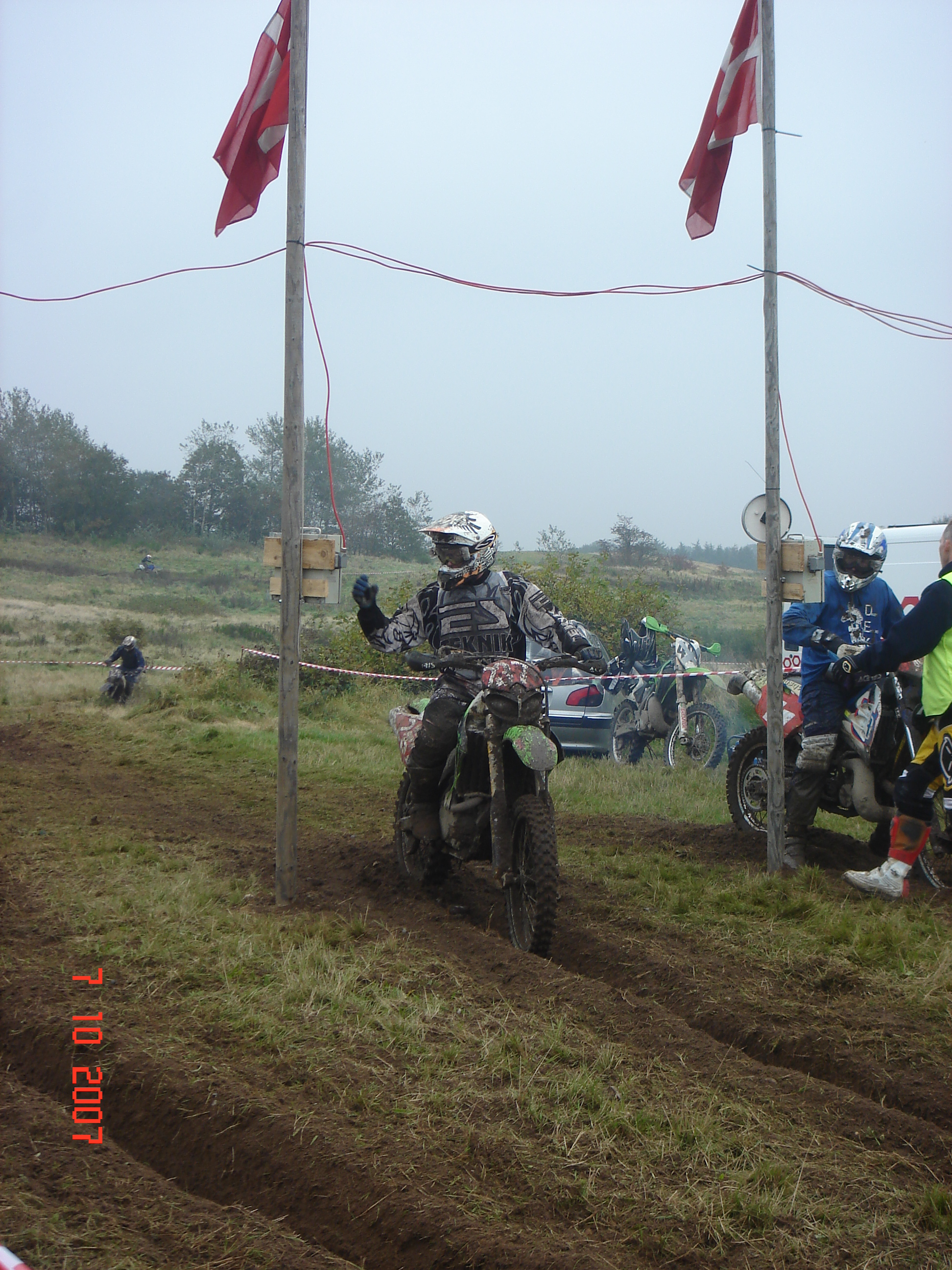
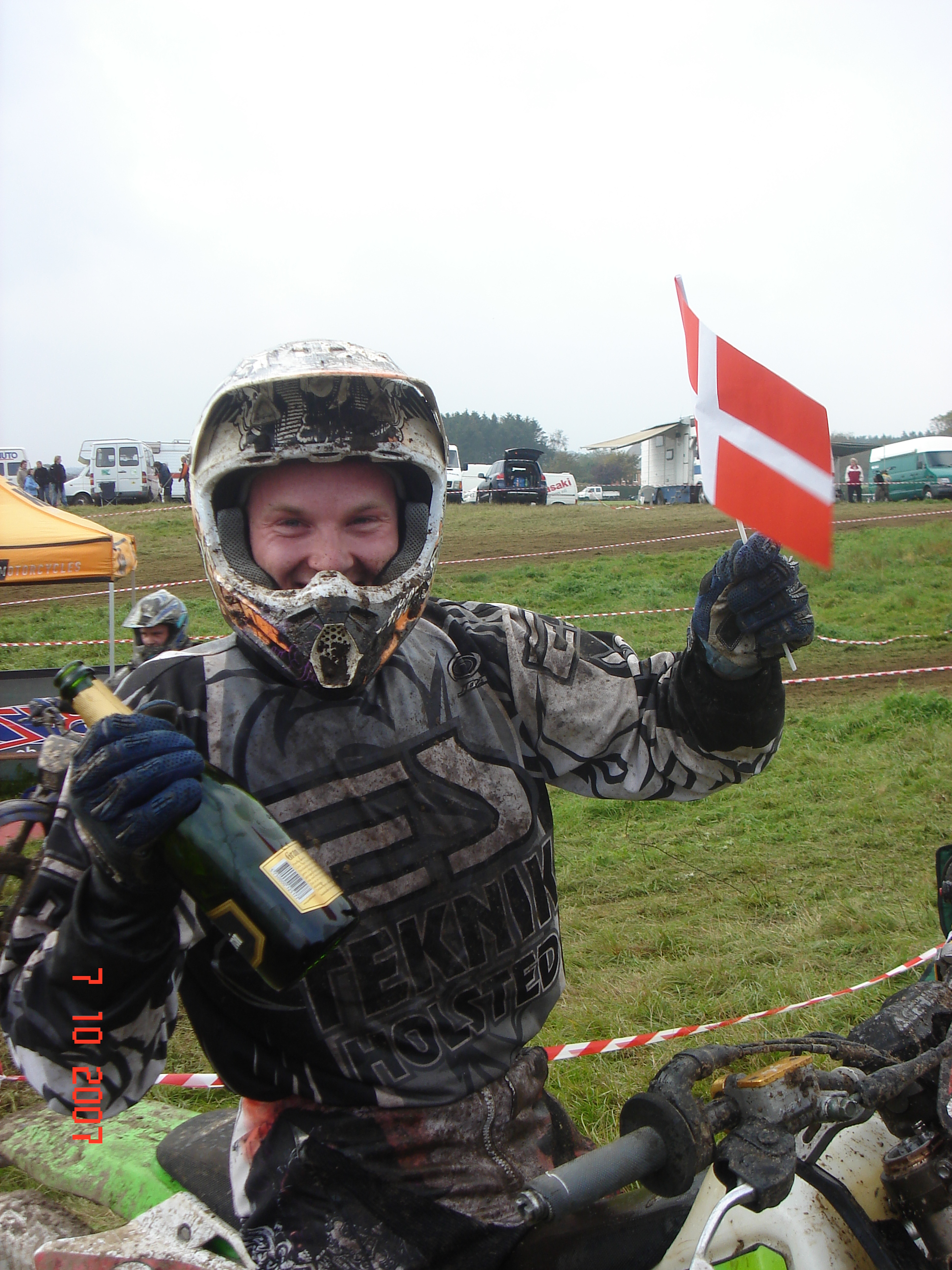
I was around 22 years old when this change of racing-rules started to change and I was coincidentally one of the youngest, if not the youngest, Enduro rider at the races at the time. The combo of youth and the speed I had from Motocross made it fairly easy to win a championship back then. Much later, with the adoption of much younger riders on fully race-ready bikes has driven the championship is a much more competitive direction.
I won my first enduro championship in 2007 and a few more times in the years to come, but for me, the real competition and challenge was abroad. I looked at my balance and realised I didn’t even have enough to buy the cheapest bike I could get (which was a GasGas 250) so I worked my butt off for a while, put the budget aside, packed my stuff and travelled to Spain early 2008 to see if I could make it. Having zero plan, no spanish language skills at the time and very limited funds with me, I only made it 4 or 5 months before I had to face the truth – nobody cared if I was in Spain, I had no ‘real’ speed and I certainly did not have any ‘real’ money.
PICS from MATARO
Coincidentally (speaking of money), Satoshi Nakamoto released the white-paper for the Bitcoin Blockchain around the time of my move to Spain. Whatever you could have invested in BTC at this time would have given you a ROI of 9,000,000%. Not bad and just a fun fact.
Anyhoo… my time in Spain was in no way a failure. It was my first true trip outside of Denmark with motorcycles and when you come from a country flat as a pancake, the feeling of freedom when riding a bike in the spanish cordillera is just pure magic. I enjoyed every second of the rides I had and I also learned a bit of Spanish on a language school in Santander. I wonder if my teacher Antonio is still alive. What a champ he was.
PICS from Santander
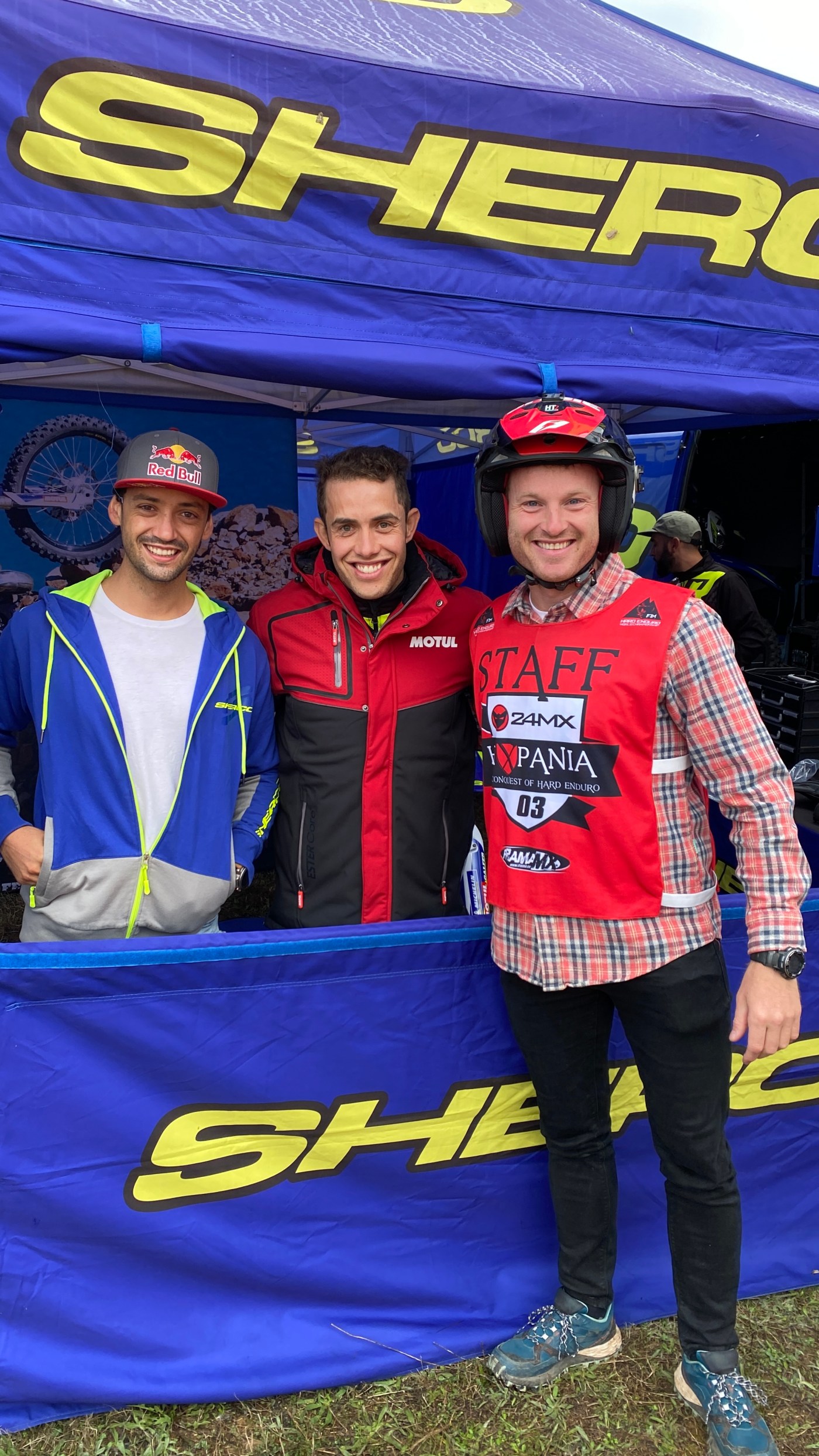
Fast forward 13 years and I’m working on a video project for HELM, a company run by my stepmom’s brothers sons; so basically my step-cousins, I guess. My phone vibrates and as I pick it up, I see the name ‘Chili’ on my display. Chili is a Spanish guy who I happened to meet a few times back in the 2008-2010 period when we both did a lot of the back-then available Hard Enduro Races. Back then, the scene of Hard Enduro was so new and there were very few races around the world. I remember we did The Tough One at the same time in the UK and perhaps a few others – but I honestly don’t remember now. I just remember I knew this guy, always said hi and talked (at least I tried to, his english wasn’t exactly much better than my spanish at the time) when we met. Later in 2016, Chili attended the race I co-founded in Mexico, and we had some really good chats. So when he called me a few weeks before the 5th edition of Hixpania Hard Enduro, it was because he needed a guy he could trust to help him minimize any misunderstandings or problems between himself and Redbull TV.
So in order to fit in this Hixpania job offer, I had to twist the throttle on the videoproject for HELM and before I could hit the send button, I had filled up my camper-van and was headed slowly, but steadily, south. The trip to Spain took 3 days and I arrived on Wednesday the week before the race.
It was remarkable how the landscape changed from southern France to northern Spain and I immediately experienced a feeling of coming home. It’s strange, but this place was truly very special to me and being back again, FINALLY, after so many years was very special.
With regards to the actual job on Hixpania, I really enjoyed it. I did a bit of everything and I think most importantly, I did everything I could to assure that everybody from RedBull TV had what they needed in terms of information and quick solutions. I know they liked how I worked, so I hope that it’ll one day translate into more job opportunities.
Also, working with Chili meant working with his entire family as everything he does, is what everyone in the family does. It was quite impressive to see how the whole family works together in not only the event, but also in the restaurant and in the office, where they have a marketing, real-estate, motorcycle shop and several other businesses. Plus all the people that helped with the event were really great to work with and the atmosphere was always nice. It really was a happy medium and very enjoyable to be part of.
I want to wrap this blog up with what I think matters a lot to a lot of young riders. Ever heard of people saying “what advice would you give your younger self?” Well, I know exactly what advice I would give my 22-year old younger self, if I knew what I know now. I am fully aware that the future can’t be predicted upon reading history books and young people generally tend to have little belief in older people (at least their parents) but due to the nature of the last 15 years of lifestyle I’ve had, the things I’ve seen, the people I’ve met, the jobs I’ve had and the projects I’ve been engaged in – I think it’s fair to say that my advice qualifies to be taken somewhat serious.
So what would I recommend my 22-year-old self and what would I recommend other young riders in 2021, wanting to get into the pro scene of Hard Enduro?
Let’s start with myself.
Invest
I would first of all have put 5 – 10% of my earnings aside from the moment I started making money, and that moment started real early in my case. I had my first job as a 12 year old sweeping floors at my dads company and when I realised what money could buy, I got more jobs distributing newspapers, I washed dishes in hotels and later when I grew older, I worked behind the counter, I waited tables in restaurants, I sold newspapers from a call-center and much much more. I always worked to pay for riding and if only I could have put 5-10% aside into some funds, I would probably have been able to retire now and live happily ever after.
Learn Spanish
I would have picked Spanish in school instead of French. I think I picked french because my mum did it when she was young, but I NEVER used it and when I moved to Spain in 2008, I so hated myself for not showing up with some basic Spanish skills. I know it could have swung the other way (especially because I actually dated a French girl a few years later) but Spanish opens up not only Spain, but all of the Latin America market.
Be patient
Probably the most given advice in history but it’s true. Be. Fucking. Patient.
I didn’t consider leaving Spain as much of a failure as you might think. I went on to take a stunt-job offer in southern China I later created a show-business for myself in Denmark and I got involved with Romaniacs early on. So leaving Spain wasn’t so bad after all. But in hindsight, if I really had wanted to continue in Spain, I should have just stayed, sold the bike, got my economy stabilised and buy the bike back when I had things more under control. I’ve learned a bit over the years about what truly matters in terms of achieving results and it’s very rarely the timing that matters. It’s the TIME you do it. Most things will eventually happen and as the great american actor Matthew McConaughey talks about in his recent autobiography Green Lights everything eventually turns from red to green. It’s just a matter of time, so be patient.
One of my best friends from Mexico came to race Hixpania. I know him as Frodo, but his real name is apparently Didier Goirand. I think Frodo fits him better though 🙂 Born in Mexico by french parents, a multi-time Mexican Enduro champion, sponsored by Sherco and Redbull. He’s 26 years old and one of the nicest guys you’ll ever come across and I’m very happy to call him a good friend.
After Hixpania, which he finished in 23rd position, we talked about his career. Didier is dreaming, like many other Hard Enduro riders I suppose, to be among the best in the world and (continue to) ride for a living. So we talked options. The dream of moving to Europe and race full-time is up amongst the most vivid of it’s kind, but also the riskiest. Staying at home in Mexico might never translate into a fulfilment of his aspirations of racing in Europe, but at the same time, Mexico is home and in Mexico, Didier is numero one. In Europe – Didier is numero 23.
So from that perspective, we have 2 different versions of the same profile. What to do? Stay at home and keep winning national races or pack up and leave? See how far you get – and maybe you can get paid to race? Or at best, not have any expenses? I know for a fact that some of world’s very best riders in Europe still have to pay for their own bike (with a discount that generally matches the depreciation value of 1 year, meaning he most likely won’t loose money on owning the bike, but he still needs to buy it).
I believe it’s very important to realise one ultra important thing, which is that you can flush all your visions of becoming a world champion, a factory rider, a business owner or whatever it is you want straight down the toilet, if you don’t have a stable fundament to build, work and live on and off.
Take the great Australian motocross/supercross rider Chad Reed as an example. He’s one of the very few people (that I know of, at least) who managed to build a racing career on the fly and if I could ask him, what he believes to have been the most important element in his career, I doubt he’s going to say “speed” or “technique” or “my drive”. He’s going to rank “Ellie” over all of his other assets. Ellie and Chad were just teenagers (I believe around 17 years old) when they migrated to Europe to pursue Chad’s dream of becoming a Pro rider and Ellie probably represented the ever-so important fundament that Chad needed in order to grow, develop and achieve what he/they did.
So in conclusion, I recommended Didier a few days ago to do what he can do from the comforts of the life he has in Mexico and start sharing with the world, his ambitions of racing at the highest level in 2022. This means putting in the effort to learn how to film, edit and upload videos to Youtube (easy and small budget), start a Patreon (free) account with exclusive content for super-fans, start a GoFundMe account (free) with a budget-goal for the 2022 FIM World Hard Enduro series as well as continue living his good life in Mexico with his girlfriend, family and friends. And if those 3 platforms don’t work, there’s always OnlyFans… 😉
If Didier can raise e.g. 25.000EURO (a modest number to compete 8 times in Europe, so he’ll still rely on some couch-surfing), he has enough to pay for the entire 2022 FIM Hard Enduro season and if he does that, then I’m sure his ‘brand-value‘ will go up. By this I mean that he’ll have an easier time doing it all over for 2023, and the fact that he has proven in 2022 that he actually did all those races, will also make the wheels spin in his favour. Plus, in effect, he will write himself into the history books as probably the most success-full and international Hard Enduro rider out of Mexico, which will add to his legacy and ‘brand-value’.
Now, what would be really interesting is when the moment comes (if it ever comes) when the LIVE TV stations that cover these races (for example RedBull) start paying guys like Didier to participate. I know it’s very far-fetched and I’m way off on a tangent here and I’ve surely had too much coffee again… but let’s say 50 riders qualify for a race finale somewhere around the world. And this race-finale (like the sunday race of Hixpania for example) is being broadcast around the world on multiple different LIVE TV stations, seen by millions of people. This is actually what happened at Hixpania. Wouldn’t it be doable for e.g. RedBull to pay out a bit to the actors of this Live TV Show?
I am fully aware that it’s a balancing act between wanting to get paid when other people make money off you and at the same time, the LIVE TV coverage works wonders when you represent sponsors.
So let’s say the world’s best 50 riders all want to get paid to be on LIVE TV. And the LIVE TV company says no. What’s going to happen is that there’s another 50 riders ready to take over their spot and the cameras can then roll. So the idea I’m putting out here is highly unrealistic, but as the sport grows and more money flows in, I don’t see why at a certain point some of that money can be channeled into the pockets of the riders, directly from the TV stations.
This is it from me today and if you are a young hopefull rider wanting to race abroad or if you simply want to talk about your career, your options, the industry or whatever – I’m more than happy to share my 2 cents on the world we’re living in and the world you’re looking at exploring. Giving back is so gratifying and I’d be happy to discuss your next career move – just like I did with Didi.
Peace out, PW
 PETER WEISS
Leave a comment